Fragile. Letters on anxiety and hope in the new culture
Original title: Frágiles
A portrait of the new anxious culture of immaterial work, and an attempt to find a way out.
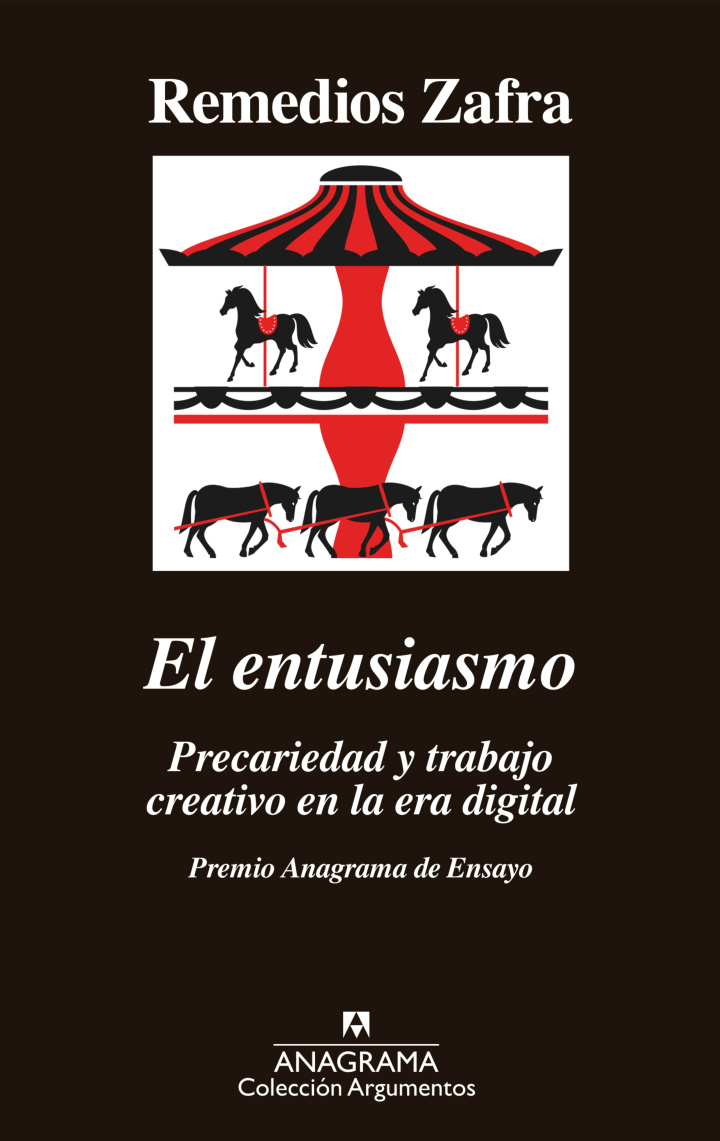
This book is motivated by an anonymous voice: that of a woman who, after reading the author’s previous essay El entusiasmo, reached out to her to say that she had described a work life so similar to hers that reading the book had made her see it as conflictive and less sustainable.
Frágiles takes on the ambivalences and derivations of an anxious culture where immaterial and creative work has turned into a practice of undefined practices that transcend that idea of work as a central activity that looked to discipline us and describe us socially. In its place, it overwhelms us with tasks mediated by technology and woven through with acceptance and numbers, so that work isn’t always what it seems and anxiety, contingency, and insecurity are normalized as the new emotional languages of workers.
In the conversation that gave way to this letter, the anonymous voice asked insistently: “Where is the hope?” This essay, then, is the possible answer that Zafra began to think about.

A portrait of the new anxious culture of immaterial work, and an attempt to find a way out.
This book is motivated by an anonymous voice: that of a woman who, after reading the author’s previous essay El entusiasmo, reached out to her to say that she had described a work life so similar to hers that reading the book had made her see it as conflictive and less sustainable.
Frágiles takes on the ambivalences and derivations of an anxious culture where immaterial and creative work has turned into a practice of undefined practices that transcend that idea of work as a central activity that looked to discipline us and describe us socially. In its place, it overwhelms us with tasks mediated by technology and woven through with acceptance and numbers, so that work isn’t always what it seems and anxiety, contingency, and insecurity are normalized as the new emotional languages of workers.
In the conversation that gave way to this letter, the anonymous voice asked insistently: “Where is the hope?” This essay, then, is the possible answer that Zafra began to think about.